
LALIGA FANTASY: Soccer Manager
La Liga Nacional de Fútbol ProfesionalSports
4.5470.00 Reviews
- Version
- 6.0.0.4
- Installs
- 5.00M
- Age Rating
- Everyone
Screenshots

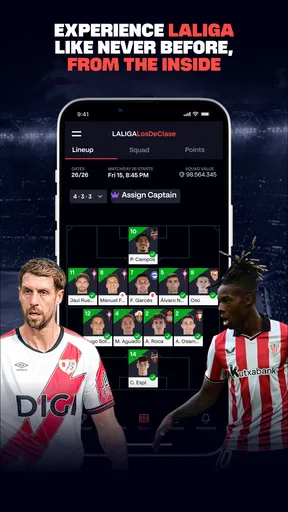

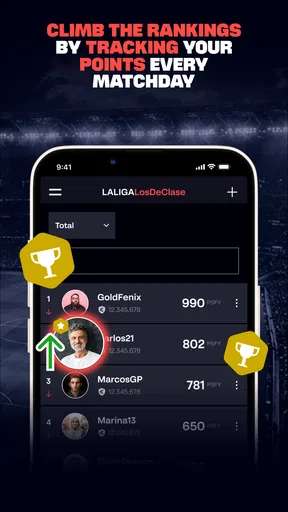
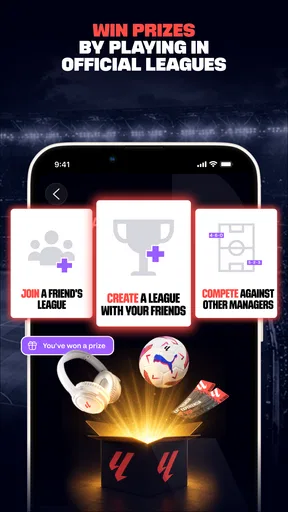
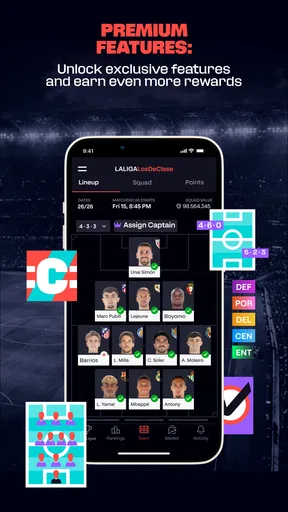
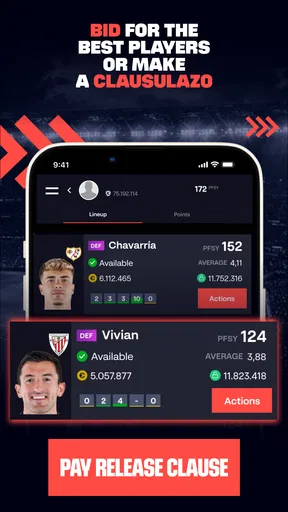
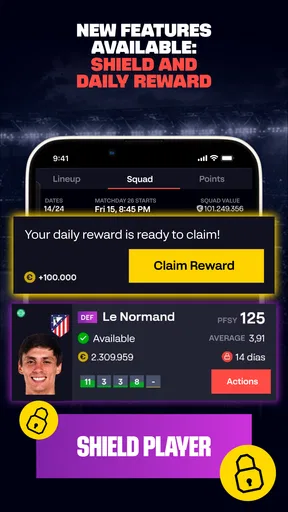
Our Review of LALIGA FANTASY: Soccer Manager
 Analysis by Appyee
I spent time with LALIGA FANTASY: Soccer Manager as a football management game, and its main appeal became clear quickly: it asks me to build a squad and make decisions like a coach rather than simply watch matches or play a conventional football game. That focus gives it a different rhythm from action-oriented soccer titles. I am not controlling every pass; I am trying to make a team that can perform over the course of the season.
The game comes from La Liga Nacional de Fútbol Profesional and is free to start. It is aimed at Everyone, so it is an approachable choice for football fans who want a management experience without needing advanced gaming skills. The store rating sits at 4.5 from roughly 196 thousand ratings, and the game has passed 5 million installs, which suggests that its fantasy-football format has found a substantial audience.
Building a team is the real game
The central capability is team creation. That sounds simple, but it changes how I look at each decision. A player is not just a familiar name or a strong individual; the important question is whether that choice improves the squad I am trying to assemble. The game turns football knowledge into a series of judgments about balance, timing and risk.
I enjoyed this more than I expected because it rewards attention rather than fast reactions. Someone who knows the league well can use that knowledge to make informed choices, while a newer player can still learn by observing what works. The experience is closer to running a football project than playing a traditional match from a broadcast camera.
That distinction matters when choosing between this and the usual alternatives. A console-style soccer game is better if I want direct control, dribbling and immediate competition. A score-tracking app is better if I only want fixtures or results. LALIGA FANTASY sits between those habits: it gives me an ongoing football challenge built around decisions, not a single short session.
The strongest part is the feeling that every squad choice has a longer consequence. I can make a decision in a few minutes, but its value becomes clearer as the season progresses. That creates a reason to return even when I do not have time for a full gaming session.
What the decision-making feels like in practice
My preferred way to use it is in short planning sessions. I check the state of my team, think about where it looks vulnerable, and avoid changing things simply because a famous player is available. This approach makes the game less about impulse and more about forming a plan. It also helps prevent the common fantasy-football mistake of filling a squad with recognizable names while ignoring overall balance.
A useful habit is to separate urgent decisions from attractive ones. An urgent decision solves a clear weakness. An attractive decision may look exciting but does not necessarily improve the team. I found that asking myself which problem I was solving before making a change made the experience more satisfying and reduced unnecessary moves.
The interface is easier to appreciate when I approach it with that mindset. I am not searching for one perfect action button. I am checking information, comparing options and deciding how much confidence to place in a choice. That makes the game suitable for players who enjoy football discussion, predictions and planning more than reflex-based gameplay.
There is also a social element to the format, even when I am playing privately. Fantasy football naturally encourages comparison: I want to know whether my judgment was better than the obvious choice, whether a risky selection paid off and whether I noticed something others missed. That competitive feeling comes from the decisions themselves rather than from controlling a match minute by minute.
One practical tip is to avoid making the game part of every spare second. I got more value from returning with a clear purpose than from repeatedly opening it without a plan. A quick check can be useful, but constant tinkering can make the experience feel like maintenance. The better routine is to review the squad, identify one or two priorities and then leave the team alone until there is a reason to reconsider it.
A realistic everyday scenario
Imagine having ten minutes on a weekday evening after work or school. You do not have enough time for a complete football match, but you still want to engage with the league. This game fits that moment well. I can open it, review my squad, consider a change and close it without feeling that I abandoned an unfinished action sequence.
It also works before watching football with friends. Instead of only discussing which club will win, I can compare the choices I made for my fantasy team and explain why I trusted one option over another. That turns viewing into a more active experience. The match is no longer just entertainment; it becomes a test of the planning I did earlier.
For a family member who knows the sport but does not enjoy complex controls, this is easier to recommend than a traditional football game. The learning curve is based on football decisions, not controller combinations. The Everyone age rating also makes it a broadly accessible choice, although younger players may still need guidance around optional purchases.
Where the free model changes the experience
The game is free to download and play, but it includes optional in-app purchases ranging from $0.99 to $33.99 per item. That does not automatically make it a poor choice, yet it is something I would consider before handing it to a child or treating it as a completely cost-free hobby. I prefer setting a personal spending limit in advance, especially in a game where improving a team can make additional options feel tempting.
The free entry point is valuable because it lets me understand the format before spending anything. I would not pay immediately just because I wanted a stronger squad. First, I would play long enough to decide whether I actually enjoy the management loop. If the planning itself is not fun, purchases will not fix that problem.
This is also where the game differs from a one-time football title. A conventional paid game may offer a clearer sense of what I am buying at the beginning. Here, the attraction is the continuing fantasy-management experience, so the temptation to keep adjusting the team can be stronger. Players who prefer a fixed campaign or a straightforward match menu may find this structure less comfortable.
Strengths that appear after longer use
The first strength is its low barrier to entry. I do not need to be skilled at virtual ball control to participate. Understanding football helps, but the game gives room for gradual improvement because I can learn from my decisions. That makes it a good fit for fans who enjoy analysis but do not consider themselves traditional gamers.
The second strength is the way it makes small decisions meaningful. A minor change can feel important because it reflects a view about the team, the league and the direction of the season. This is more engaging than simply collecting players without a reason. The game is at its best when I treat each move as part of a wider plan.
The third strength is session flexibility. I can play in short bursts, which is useful on a phone. It does not demand that I reserve a long uninterrupted block of time every time I want to interact with my team. That makes it more practical than many sports games for commuting, breaks or quiet evenings.
There is a less obvious benefit too: it encourages me to articulate why I rate a player or strategy. Instead of saying that a choice “feels right,” I start thinking about what role it serves. That makes the game enjoyable for football fans who like debates and predictions, even if they are not interested in competitive gaming culture.
Tradeoffs and points of friction
The same deliberate pace that I like can feel slow to someone expecting immediate action. If your ideal football game involves controlling a striker, scoring goals and hearing the crowd react, this will not replace that experience. The core satisfaction comes from anticipation and judgment, so there may be less excitement during a quick first session.
There is also a risk of overthinking. Fantasy management can encourage me to change a team because I am bored rather than because I have identified a genuine improvement. That is not a flaw unique to this title, but the game makes discipline important. My advice is to keep a simple reason for every major adjustment and to accept that not every result can be controlled.
Another tradeoff is emotional. When I choose a player I personally like, I may want to keep supporting that choice even when the wider team plan suggests a different move. The game is more rewarding when I separate loyalty from strategy. Fans who want to build a squad entirely around personal favorites may enjoy the identity of their team, but they may also limit its effectiveness.
Players should also consider the ongoing nature of the experience. It is not the best choice if you want a game that can be completed and put aside. Its appeal depends on returning to the team and continuing the management challenge. If you prefer self-contained matches, puzzle games or offline campaigns, another sports title may suit you better.
Who will get the most from it
I would recommend it most strongly to football supporters who enjoy the thinking around the sport: squad selection, predictions, comparisons and the satisfaction of being right about an overlooked choice. It is particularly suitable for someone who wants a mobile game that can be checked briefly but still develops into a longer personal project.
It is also a good introduction to fantasy football for a player who has avoided it because traditional sports games seem too technical. The important skills are observation and judgment. You can begin with basic choices, notice which decisions help and gradually develop your own method.
On the other hand, I would steer away from it if your priority is direct control or fast competition. It will not give the same feeling as a match-based soccer game. I would also be cautious about recommending it to anyone who dislikes optional purchases or finds long-term team management stressful. The free starting point is helpful, but the purchase range means it is sensible to decide your boundaries before playing regularly.
The game supports Android devices running version 8.0 or later, and the current version is 6.0.0.4. That makes checking device compatibility worthwhile before downloading, particularly on an older phone or tablet. The developer is La Liga Nacional de Fútbol Profesional, so the title has a clear connection to the league it represents rather than presenting itself as a generic football manager.
My final view after weighing the format
LALIGA FANTASY: Soccer Manager succeeds because it understands what makes fantasy football appealing: the pleasure of making a call, waiting to see how it works and learning from the result. Its best feature is not a flashy match presentation but the ongoing responsibility of building a team that reflects my football judgment.
I would start with the free version, establish a routine of purposeful checks and avoid spending until the management loop has proved enjoyable. That approach keeps the game focused on its strongest quality instead of turning every decision into a purchase opportunity. I would also choose it over a conventional soccer game only when I wanted planning rather than direct play.
For the right player, this is a thoughtful and accessible sports game with enough depth to support regular returns. It is not a replacement for controlling a match, and its long-term structure will not appeal to everyone. But if you like discussing football, testing your instincts and building a squad one decision at a time, I think it is worth trying.
Verdict
Strengths of LALIGA FANTASY: Soccer Manager
- Official LaLiga branding with real clubs, players, and competitions.
- Live scores and player performances influence fantasy points.
- Frequent transfers and lineup changes keep each matchday engaging.
- League formats let you compete with friends or other football fans.
- Useful for following LaLiga news while managing your squad.
Limitations of LALIGA FANTASY: Soccer Manager
- Player prices can make it difficult for beginners to build a balanced squad.
- Injuries, suspensions, and late lineup changes may hurt your score unexpectedly.
- Some leagues may feel unfair when experienced managers dominate the market.
- Requires regular check-ins to adjust tactics, transfers, and starting lineups.
- Performance and features may vary depending on the current LaLiga season.
Other Releases by La Liga Nacional de Fútbol Profesional
View All
LALIGA Official App 2026/27
Sports4.4
Similar Picks in This Category
View All
8 Ball Pool
Miniclip.com4.8

Pooking - Billiards City
AIM TOP GAME TECHNOLOGY LIMITED - pool4.6

Carrom Pool: Disc Game
Miniclip.com4.4

EA SPORTS FC Soccer Mobile 26
ELECTRONIC ARTS4.6

World Soccer League
mobirix4.3

Soccer Cup 2026: Football Game
INLOGIC SPORTS - football tennis golf soccer4.3
Frequently Asked Questions
What is LALIGA FANTASY: Soccer Manager?
LALIGA FANTASY: Soccer Manager is a football management game based on Spain’s LaLiga competition. You create and manage your own fantasy team by signing real players, arranging your lineup, choosing tactics, and competing against friends or other users. Your team’s performance is influenced by the real-life performances of the footballers selected in your squad.
How does scoring work in LALIGA FANTASY?
Points are generally awarded according to how players perform in real LaLiga matches. Goals, assists, minutes played, defensive actions, goalkeeper saves, and other match events can affect a player’s score, while poor performances, cards, missed chances, or conceding goals may reduce it. The exact scoring system and available competitions should be checked inside the app, as rules can vary by league or game mode.
Can I play LALIGA FANTASY with friends?
Yes, one of the main attractions of LALIGA FANTASY is creating or joining private leagues with friends, family, or colleagues. Managers compete throughout the season by improving their squads, making transfers, and selecting the best possible lineup each matchday. Before joining, make sure everyone understands the league’s transfer rules, budget settings, deadlines, and scoring format.
Does LALIGA FANTASY require real money to play?
The game can generally be played without paying, allowing users to build a squad, participate in leagues, and manage transfers using the resources provided in the game. However, some versions or features may include optional purchases, promotional content, or premium elements. Review the in-app purchase information carefully, especially if children use the device or payment details are saved.
What should I know before downloading LALIGA FANTASY?
You should have a stable internet connection because the app depends on updated football data, live match information, league standings, and transfer activity. You may also need to create an account or sign in to access all features. Check the required Android or iOS version, available storage, privacy permissions, and notification settings before installing, particularly if you want timely matchday reminders.
Play our best games!


